Masala Menu
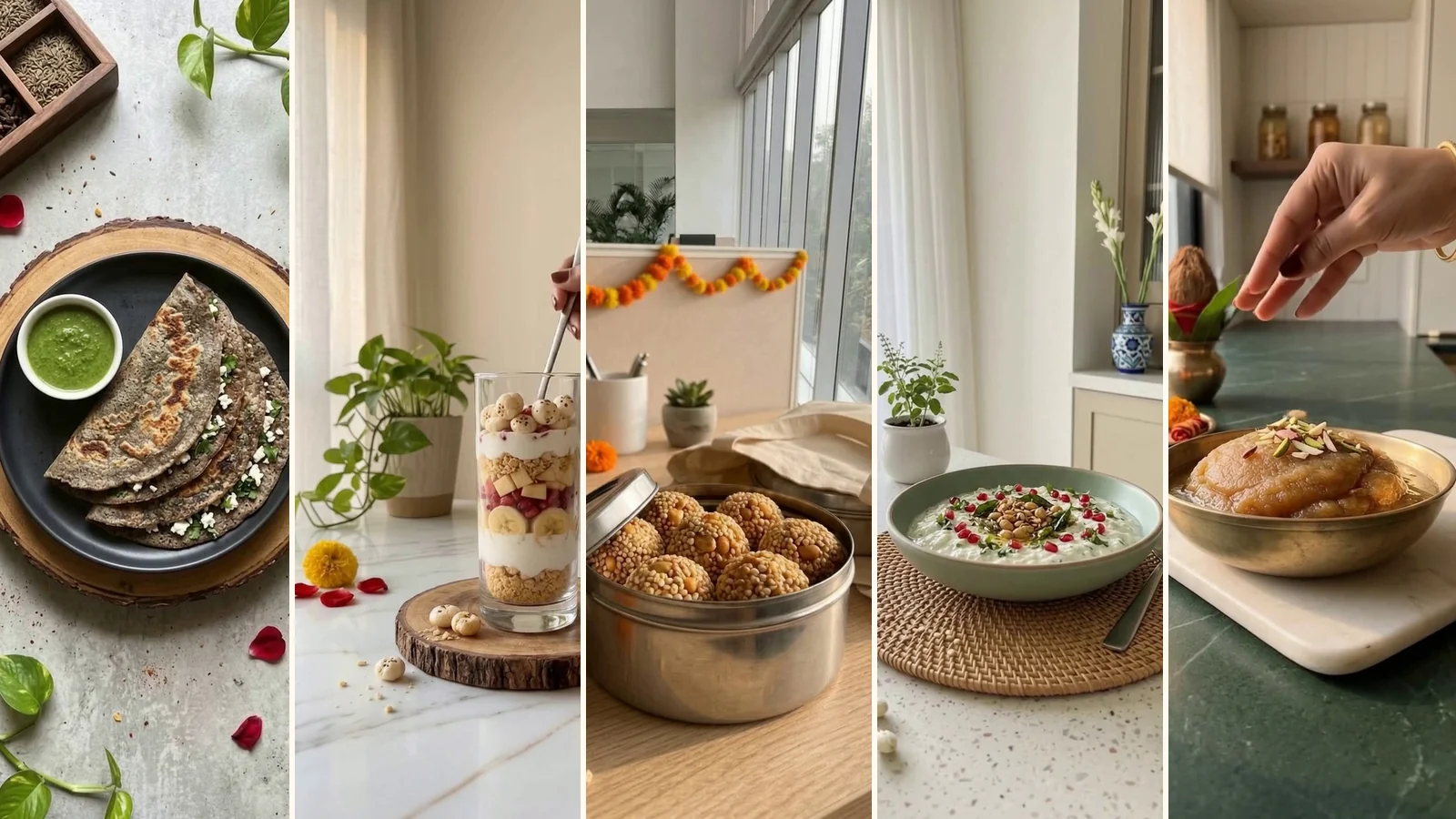
Five vrat-friendly recipes, one for each part of a fasting day: a protein breakfast, a five-minute parfait, an office snack, a light lunch and halwa for Ashtami. They use kuttu, makhana, rajgira, samak and singhara with sendha namak, and no onion or garlic.
| # | Recipe | Meal | Serves · time |
|---|---|---|---|
| 1 | Kuttu Paneer Cheela | Breakfast | 2 · 35 min |
| 2 | Fruit & Makhana Yogurt Parfait | Breakfast | 2 · 8 min |
| 3 | Rajgira Peanut Ladoo | Snack | 10–12 ladoos · 15 min |
| 4 | Samak Rice Yogurt Bowl | Lunch | 2 · 1 hr |
| 5 | Singhara Flour Halwa | Dessert, Ashtami bhog | 3–4 · 25 min |
About Navratri
Navratri means “nine nights”: a Hindu festival honoring the goddess Durga, with each night dedicated to one of her nine forms. It comes twice a year, in spring (Chaitra Navratri) and in autumn (Sharad Navratri), and the autumn one is the most widely celebrated. The tenth day is Dussehra, also called Vijayadashami, which marks the victory of good over evil.
Every region celebrates it differently: garba and dandiya nights in Gujarat, Durga Puja in Bengal, golu doll displays in the South. Across many homes, the nine days also mean fasting, or vrat, and a separate set of ingredients in the kitchen. On Ashtami or Navami, the eighth or ninth day, many families hold kanya pujan and offer halwa as prasad.
A note on fasting rules
Every family keeps the Navratri fast its own way, and the rules change from region to region and home to home. Some eat one meal a day, some only fruit and milk, some cook with a set list of flours. These recipes stick to ingredients most vrat kitchens use: kuttu (buckwheat), rajgira (amaranth), samak (barnyard millet), singhara (water chestnut flour), makhana (fox nuts), sendha namak (rock salt), dairy, fruit and nuts. Where some homes skip an ingredient, such as coriander and lemon in the cheela or curry leaves in the bowl, the recipe says so. Follow your own family’s way.
1. Kuttu Paneer Cheela (breakfast)
 Watch the Short · 1:17
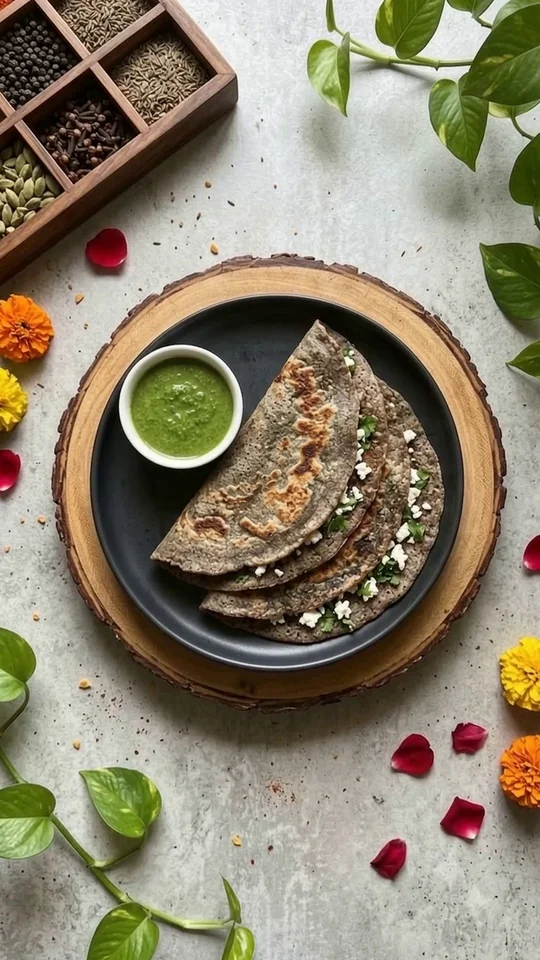
Buckwheat-flour pancakes folded over a spiced paneer filling: a vrat breakfast with protein that keeps you full until the evening aarti, unlike sabudana khichdi. Made with kuttu atta and sendha namak, with no onion or garlic. If your family skips coriander or lemon during the fast, leave them out.
- Serves 2 (4 cheelas)
- Prep 20 min
- Cook 15 min
For the batter
- 1 cup kuttu atta (buckwheat flour)
- ¾ to 1 cup water, added slowly
- ½ tsp sendha namak (rock salt)
- ½ tsp jeera (cumin seeds)
- ¼ tsp black pepper powder
- 1 green chilli, finely chopped
- ½ tsp grated ginger
- 1 tbsp chopped coriander
For the paneer filling
- 100 g paneer, crumbled
- A pinch of rock salt and black pepper
- 1 tbsp chopped coriander
- 1 tsp lemon juice
To cook
- 2–3 tsp ghee
Method
- Mix the buckwheat flour, rock salt, cumin, pepper, chilli, ginger and coriander. Add water a little at a time and whisk to a smooth batter, like thick dosa batter. Rest 10 minutes.
- Mix the paneer with a pinch of salt and pepper, the coriander and the lemon juice.
- Heat a pan on a medium flame. On high, buckwheat burns outside before it cooks through.
- The batter thickens as it rests, so whisk in 1–2 tbsp water before each cheela.
- Spread ½ tsp ghee on the pan, pour a ladle of batter and spread it gently, about 4 mm thick. Cook 1–2 minutes, until the top looks dry.
- Flip, add a quarter of the paneer on one half, fold it over and press lightly.
- Serve hot with green chutney or yogurt.
Tip: Keep the flame at medium: buckwheat burns on the outside before the middle cooks. And whisk 1–2 tbsp water into the rested batter before each cheela, because it keeps thickening.
Contains: dairy (paneer, ghee).
2. Fruit & Makhana Yogurt Parfait (breakfast)
 Watch the Short · 0:52
Thick honey-cardamom yogurt, fresh fruit and crunchy roasted makhana (fox nuts) in a glass: a 5-minute breakfast for the morning after garba. The only cooking is roasting the makhana for 2–3 minutes. Yogurt, fruit, makhana, honey and nuts are fasting-friendly in most homes, so use whatever fruit you have.
- Serves 2 (2 glasses)
- Prep 5 min
- Cook 3 min
For the makhana
- 1 cup makhana (fox nuts)
- 1 tsp ghee
For the sweet yogurt
- 1½ cups thick yogurt (hung curd or Greek yogurt works best)
- 1–1½ tbsp honey (or 1 tbsp jaggery powder)
- A pinch of cardamom powder
For the fruit
- 1 banana, sliced
- ½ apple, diced small
- ½ cup pomegranate seeds
- A few grapes, halved (optional)
To top
- 1 tbsp chopped almonds or walnuts
- Honey to drizzle
Method
- Heat the ghee in a pan on low and roast the makhana for 2–3 minutes, stirring, until one breaks with a crisp snap.
- Let the makhana cool for a minute, then lightly crush about half. Keep the other half whole for the top.
- Whisk the yogurt with the honey and cardamom until smooth. Watery yogurt makes runny layers, so hang it in a cloth for 20 minutes or use Greek yogurt.
- Dice the fruit into small, even pieces.
- Layer in a tall glass: crushed makhana, yogurt, fruit, then crushed makhana, yogurt and fruit again.
- Top with the whole makhana, pomegranate and nuts, and finish with a drizzle of honey.
- Serve right away. To make it ahead, layer the yogurt and fruit in the fridge and add the makhana when serving.
Tip: Roast a big batch of makhana and keep it airtight, and the parfait takes 2 minutes all week. Add it last: makhana goes soft in yogurt within about 10 minutes.
Contains: dairy (yogurt, ghee), tree nuts (almonds or walnuts).
3. Rajgira Peanut Ladoo (snack)
 Watch the Short · 1:02
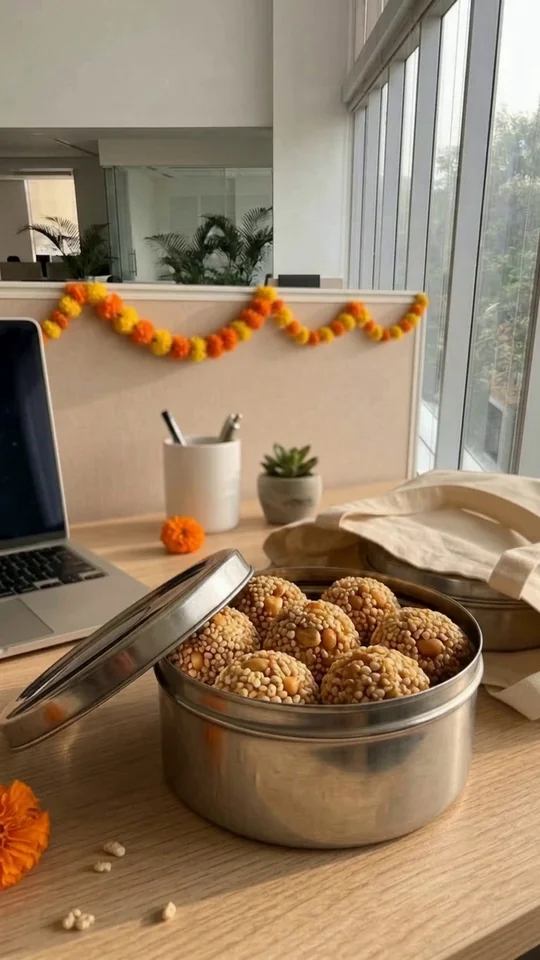
Puffed amaranth and roasted peanuts bound in jaggery syrup make a light, crunchy energy ladoo. When the 4 pm samosa-and-chai order goes round the office, keep a box of these in your bag. The only cooking is 2–3 minutes of syrup, and they stay fresh for 2 weeks.
- Makes 10–12 small ladoos
- Prep 10 min
- Cook 5 min
Ingredients
- 2 cups puffed rajgira (amaranth), sold as rajgira lahi or ramdana
- ½ cup roasted peanuts, skins rubbed off, coarsely crushed
- ¾ cup grated jaggery (gud)
- 2 tbsp water
- 1 tsp ghee, plus a little for your palms
- A pinch of cardamom powder
Method
- Keep the puffed amaranth and crushed peanuts ready in a bowl, because the next steps move fast.
- In a heavy pan, heat the ghee, jaggery and water on low until the jaggery melts, then let it bubble for 2–3 minutes.
- Soft ball test: drop a little syrup into a bowl of water. If it gathers into a soft ball you can roll between your fingers, it’s ready. If it dissolves, cook 30 seconds more and test again.
- Turn off the heat. Stir in the cardamom, then tip in the amaranth and peanuts and mix quickly until everything is coated.
- Grease your palms with ghee and, while the mixture is still warm, press a spoonful firmly into a ladoo. Careful: jaggery syrup is very hot, so let it cool for 30 seconds if it’s too hot to touch.
- Shape fast, because the mixture sets as it cools. If it hardens, warm the pan on low for 20 seconds.
- Cool completely and store in an airtight container for up to 2 weeks.
Tip: The soft-ball test is the whole recipe: undercooked syrup won’t hold, overcooked turns hard. Shape while the mix is warm, and if it sets, rewarm the pan on low for 20 seconds.
Contains: peanuts, dairy (ghee).
4. Samak Rice Yogurt Bowl (lunch)
 Watch the Short · 0:53
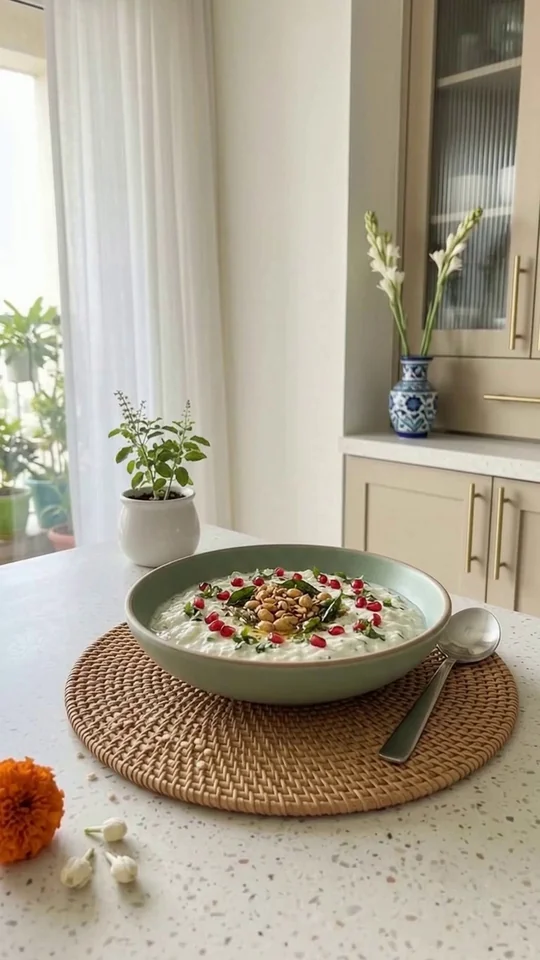
Four days into Navratri and it’s been pakoras, tikkis and chips on repeat? This cool bowl of soft barnyard millet in creamy yogurt, with cucumber, a ghee tadka of cumin, peanuts, ginger, chilli and curry leaves, and pomegranate on top, gives your stomach a break. With samak rice, rock salt and no mustard seeds, it suits most vrat kitchens. Skip the curry leaves if your family does.
- Serves 2
- Prep 40 min
- Cook 20 min
For the rice
- ½ cup samak rice (barnyard millet, or vrat ke chawal)
- 1½ cups water
- ½ tsp sendha namak (rock salt)
For the yogurt mix
- 1 cup yogurt, whisked
- 2–3 tbsp milk
- 3 tbsp grated cucumber, lightly squeezed
- Rock salt to taste
For the tadka
- 1 tbsp ghee
- 1 tsp cumin seeds
- 2 tbsp peanuts
- ½ tsp grated ginger
- 1 green chilli, slit
- 8–10 curry leaves
For the topping
- 3 tbsp pomegranate seeds
- 1 tbsp chopped coriander
Method
- Rinse the samak rice 2–3 times, soak it for 15 minutes, then drain.
- Bring the water and rock salt to a boil, add the rice, cover and cook on low for 10–12 minutes until soft and the water is absorbed (or 2 whistles in a pressure cooker). Mash lightly with the back of a spoon.
- Let it cool completely. Spread it on a plate to speed this up.
- Stir in the yogurt, milk, cucumber and salt. It should be creamy, not stiff, so add another spoon of milk if needed.
- For the tadka, heat the ghee and add the cumin. When it crackles, add the peanuts and fry until golden. Add the ginger, green chilli and curry leaves (they’ll splutter) for 10 seconds, then pour it straight over the bowl.
- Top with pomegranate and coriander. Serve chilled or at room temperature. If it thickens in the fridge, loosen it with a spoon of milk or yogurt.
Tip: Cool the rice completely before the yogurt goes in: hot rice turns the yogurt sour and makes it split. The milk keeps it from souring too, so the bowl stays fresh for 4–5 hours in a lunch box.
Contains: dairy (yogurt, milk, ghee), peanuts.
5. Singhara Flour Halwa (Ashtami bhog)
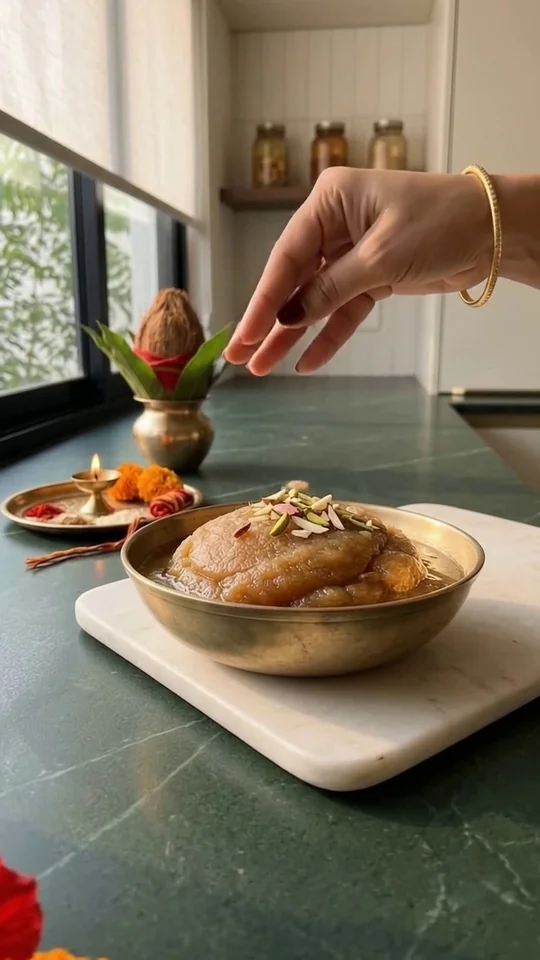 Watch the Short · 1:00
The taste of Ashtami mornings at nani’s: water chestnut flour roasted slowly in ghee until golden and nutty, then cooked in hot saffron syrup and finished with cardamom, almonds and pistachios. It’s the classic vrat halwa, and a quick bhog for Ashtami and Navami.
- Serves 3–4
- Prep 5 min
- Cook 20 min
For the syrup
- 1½ cups water (or half water, half milk, for a creamier halwa)
- ½ cup sugar (⅓ cup for less sweet, or the same amount of jaggery)
- 8–10 saffron strands
For the halwa
- 4 tbsp ghee
- ½ cup singhara atta (water chestnut flour)
- ¼ tsp cardamom powder
- 1 tbsp sliced almonds
- 1 tbsp sliced pistachios
Method
- In a small pan, bring the water, sugar and saffron to a boil until the sugar dissolves. Keep it hot on the lowest flame.
- Heat the ghee in a heavy kadhai or pan on low. Add the flour and roast it for 7–8 minutes, stirring all the time, until it turns golden brown, smells nutty and the ghee starts to separate at the edges.
- Pour in the hot syrup slowly and carefully, standing back, because it splutters hard. Stir fast to break up any lumps.
- Cook for 2–3 minutes on low, until the halwa thickens, leaves the sides of the pan and the ghee shines through.
- Stir in the cardamom and most of the almonds and pistachios. Serve warm as bhog, topped with the rest of the nuts. It firms up as it cools, so loosen leftovers with a splash of hot water or milk when you reheat them.
Tip: Keep the syrup hot: that’s what stops lumps. And don’t rush the roast. On high heat the flour burns in seconds, and under-roasted flour tastes raw and slightly bitter; 7–8 minutes on low, until the ghee separates.
Contains: dairy (ghee, and milk if used), tree nuts (almonds, pistachios).
A day of Navratri meals
Put together, the five make one full fasting day:
- Breakfast: kuttu paneer cheela, or the makhana parfait if you were at garba till late.
- Mid-afternoon: two rajgira peanut ladoos from the box in your bag.
- Lunch: the samak rice yogurt bowl, packed in the morning.
- After the evening aarti, or on Ashtami: singhara halwa.
Make ahead: the ladoos keep for 2 weeks in an airtight container, and roasted makhana keeps airtight all week, so on a busy morning the only things to cook fresh are the cheela or the bowl.
How to plan the nine days in Masala Menu
Nine days of fasting food is a lot of deciding. Here’s how to do it once, in Masala Menu:
- Save each recipe from its Short. Copy the Short’s link from YouTube and paste it into Add a recipe. The app reads the video’s description, where the full recipe is written out. Saving from a link is best-effort, so check each one and fill any gaps.
- Tag them “navratri” or “vrat”, so the fasting recipes are one filter away.
- Attach each recipe to a meal: the cheela to breakfast, the bowl to lunch, and so on.
- Plan one day, then fill the rest of the week, swapping in the dishes your family rotates through.
- Share the plan with whoever’s cooking or shopping.
New to saving recipes from links? Here’s how recipes work in Masala Menu.
Navratri fasting FAQ
Can I eat rice during the Navratri fast?
Regular rice is usually avoided during the fast. Samak rice, sold as vrat ke chawal, isn’t rice at all: it’s barnyard millet, and it’s eaten during the fast in many homes. That’s what the yogurt bowl above uses.
Which flours are used for vrat cooking?
The usual ones are kuttu atta (buckwheat), singhara atta (water chestnut), rajgira atta (amaranth) and samak (barnyard millet) flour. Wheat, rice flour and gram flour are left out.
Is sendha namak the same as regular salt?
Sendha namak is rock salt: mined rather than evaporated from sea water, and not processed like table salt. It’s the salt used in fasting food, so every savory recipe here uses it.
What snacks can I carry to work during Navratri?
Rajgira peanut ladoos travel well and keep for 2 weeks in an airtight container, so one batch covers the whole festival. Roasted makhana is another easy option, and it keeps airtight all week.
Watch the Shorts
Prefer to watch first? Each of these five recipes is a quick, minute-long Short on our YouTube channel. Subscribe to Masala Menu on YouTube for new recipes through the festive season and beyond.
Happy Navratri! 🪔💃